

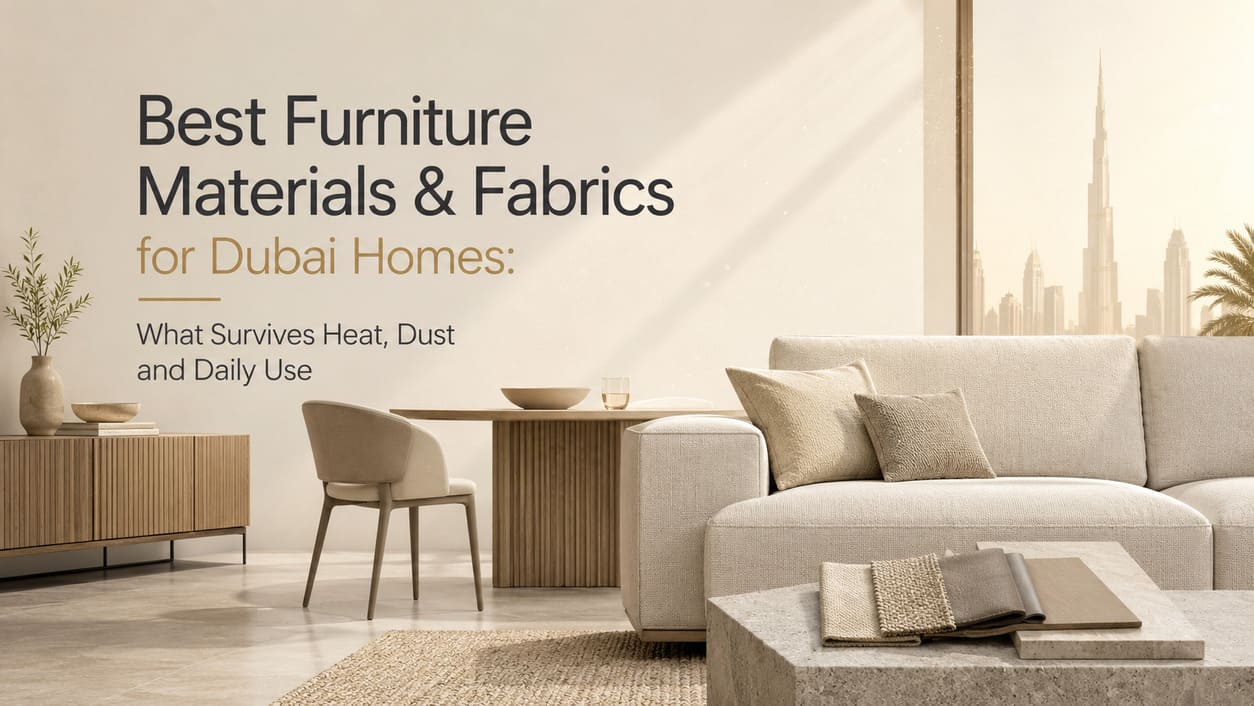
Choosing furniture for a Dubai home is not the same as choosing furniture for a cooler, milder climate. In Dubai, sofas, dining chairs, cabinets, and tables have to handle intense sunlight, fine dust, indoor air conditioning, and heavy daily use. A fabric that looks beautiful in a showroom may fade, trap dust, or become difficult to maintain once it is placed in a bright living room or a busy family space.
That is why the best furniture materials and fabrics for Dubai homes are the ones that combine durability with easy maintenance. They need to resist heat, cope well with dust, stay practical under everyday wear, and still feel comfortable to live with. For most homes, performance fabrics such as microfiber, performance polyester, solution-dyed acrylic, and olefin tend to work better than delicate natural options. On the furniture material side, HMR MDF, marine plywood, HPL finishes, and sintered stone are among the most reliable choices for long-term use.
This guide explains which materials truly survive heat, dust, and daily use, which ones are better used with caution, and how to choose the right option for your space.
Quick Answer: The Best Materials for Dubai Homes at a Glance
If you want the short version, these are the most practical options for most Dubai interiors.
|
Material or Fabric |
Best For |
Why It Works in Dubai |
Main Watch-Out |
|
Microfiber |
Family sofas, everyday seating |
Resists dust buildup, easy to clean, durable |
Can feel less luxurious than natural fabrics |
|
Performance Polyester |
Living rooms, high-traffic homes |
Strong, stain-resistant, practical for daily use |
Quality varies by manufacturer |
|
Solution-Dyed Acrylic |
Sunny rooms, balconies |
Excellent fade resistance, handles strong sunlight well |
Usually costs more than basic upholstery fabrics |
|
Olefin |
Casual seating, indoor-outdoor use |
Moisture-resistant, low-maintenance, durable |
Less refined feel than premium fabrics |
|
PU Leather or Leather Alternatives |
Dining chairs, easy-clean surfaces |
Wipes clean quickly, practical for spills |
Low-quality versions may crack over time |
|
HMR MDF |
Indoor cabinets and furniture |
More moisture-resistant than standard MDF, stable for daily use |
Not ideal for direct water exposure |
|
Marine Plywood |
Kitchens, bathrooms, humid zones |
Strong, reliable in moisture-prone areas |
More expensive than basic board materials |
|
HPL Finishes |
Tables, cabinets, hard-working surfaces |
Scratch-resistant, heat-resistant, easy to maintain |
Finish quality matters a lot |
|
Sintered Stone or Porcelain |
Dining tables, tops, surfaces |
Resists heat, stains, and heavy use very well |
Premium price point |
Why Dubai Homes Need Different Furniture Materials
Dubai homes face a combination of conditions that can wear furniture out faster than many buyers expect. Strong sunlight is one of the biggest issues. Fabrics near large windows can fade over time, while darker finishes and some synthetic surfaces may heat up quickly in direct sun. Dust is another constant factor. Even in well-maintained homes, fine particles settle on upholstery and textured surfaces, which means materials that are hard to clean can become frustrating very quickly.
Indoor conditions matter too. Many homes rely heavily on air conditioning for most of the year. That constant cooling can create a dry indoor environment, while kitchens, bathrooms, and seasonal humidity changes still expose some furniture materials to moisture stress. Add children, pets, guests, meals, and normal daily movement, and it becomes clear why furniture in Dubai must be chosen for performance, not only for looks.
What Makes a Material Good for Heat, Dust and Daily Use?
A good furniture material for Dubai should be able to do several things well at the same time. It should not only look attractive on the first day, but remain practical months and years later.
The most important qualities to look for are:
-
resistance to fading in bright light
-
easy cleaning and low dust retention
-
good durability in high-traffic areas
-
resistance to stains, spills, and surface wear
-
comfort in warm conditions
-
stable performance under indoor cooling and changing humidity
When a material performs well in most of these areas, it is usually a safer choice for Dubai homes than a more delicate option that needs constant care.
Best Upholstery Fabrics for Dubai Homes

Microfiber: Best for Dust Resistance and Easy Cleaning
Microfiber is one of the most practical sofa fabrics for Dubai homes. Its tightly woven structure helps reduce deep dust penetration, which makes regular cleaning easier. It is also comfortable for daily use and works especially well in family living rooms where furniture gets used every day.
For households with children or frequent guests, microfiber is often a smart choice because it handles wear better than many delicate fabrics. It may not have the natural character of linen or cotton, but it makes up for that with practicality, which matters more in high-use spaces.
Performance Polyester: The Best All-Round Fabric for Everyday Use
Performance polyester is one of the best all-round upholstery fabrics for Dubai weather and lifestyle. It is widely used because it can balance comfort, durability, and stain resistance at a reasonable price. Good-quality performance polyester also holds its color well and is easier to maintain than many natural fabrics.
This makes it a strong option for sectionals, family sofas, accent chairs, and even upholstered beds. The key point is quality. A cheap polyester fabric may pill or wear poorly, while a well-made performance polyester can last for years and still look presentable.
Solution-Dyed Acrylic: Best for Sunny Rooms and Balconies
If your home gets a lot of direct light, solution-dyed acrylic is one of the best choices available. It is designed to resist fading better than many standard upholstery fabrics, which makes it especially useful in bright living rooms, sunlit corners, and shaded balcony seating.
This fabric is often associated with outdoor furniture, but it can also be a smart indoor option in homes with large windows and strong sun exposure. It is not always the softest choice compared to indoor-only fabrics, but its performance in harsh light gives it a real advantage in Dubai.
Olefin: Best for High Heat and Low-Maintenance Living
Olefin is another strong performer for homes that need durable, low-maintenance upholstery. It handles moisture well, resists many stains, and does not demand high-effort care. In practical terms, that makes it useful for casual seating, multipurpose rooms, and homes where furniture needs to survive daily life without constant attention.
Its main limitation is aesthetic. It may not always deliver the rich texture or premium look some homeowners want. Still, for functional spaces, it is one of the safest choices.
Linen Blends: Best Only for Low-Traffic, Cooler Spaces
Linen has a relaxed, elegant look that many people love, but pure linen is usually not the best fabric for busy Dubai homes. It wrinkles easily, can wear faster under heavy use, and is less forgiving when it comes to stains and maintenance.
That said, linen blends can work well in lower-traffic areas such as bedrooms, decorative chairs, or formal sitting spaces. If you want that soft natural look, a blended fabric is usually a better choice than pure linen because it offers a little more resilience.
PU Leather and Leather Alternatives: Best for Wipe-Clean Surfaces
PU leather and similar leather alternatives are often a practical choice for dining chairs, breakfast seating, and homes that need quick cleaning. They are especially useful where spills are common and where smooth, wipe-clean surfaces make life easier.
However, quality matters a lot. Low-grade versions may crack, peel, or age poorly, especially in areas with heat and heavy use. If you choose this option, it is worth investing in a higher-quality finish rather than the cheapest alternative.
Best Furniture Materials Beyond Fabric

Upholstery matters, but the structure and surface materials of furniture matter just as much. A sofa may have the right fabric, but if a table finish scratches easily or a cabinet core swells too quickly, the furniture still will not perform well in Dubai conditions.
HMR MDF: Best for Everyday Indoor Furniture
HMR MDF, or high-moisture-resistant MDF, is one of the most practical materials for indoor furniture such as wardrobes, TV units, sideboards, and bedroom pieces. It offers better resistance to moisture than standard MDF and usually provides a smooth, stable base for painted or laminated finishes.
For most indoor applications, it is a dependable choice. It is not meant for direct water exposure, but for standard residential use it performs far better than low-grade MDF.
Marine Plywood: Best for Moisture-Prone Areas
Marine plywood is a stronger option for kitchens, bathrooms, and other areas where moisture resistance matters more. It is known for its durability and structural reliability, which makes it a good choice when furniture is expected to handle more demanding conditions.
Not every room needs marine plywood, but in the right areas it can improve long-term performance and reduce the risk of swelling or warping.
HPL and Laminate Finishes: Best for Scratch and Heat Resistance
HPL, or high-pressure laminate, is one of the most useful surface materials for everyday living. It is popular for cabinets, tabletops, and storage units because it is generally resistant to scratches, stains, and daily wear. In a Dubai home, where furniture is often used heavily and cleaned frequently, that is a major advantage.
A good HPL finish can also make furniture easier to maintain over time. This is especially important for family homes, rental properties, and interiors where practicality matters as much as appearance.
Sintered Stone and Porcelain: Best for Heat- and Stain-Prone Surfaces
For dining tables, coffee tables, side tables, and worktops, sintered stone and porcelain are among the best premium materials available. They resist heat, stains, and surface damage very well, which makes them ideal for busy homes where tables are used daily.
They also suit contemporary interiors because they offer a clean, refined look while remaining highly functional. If budget allows, these materials are often a better long-term investment than more delicate stone surfaces.
Materials and Fabrics to Avoid in Dubai Homes
Not every attractive material is a good fit for Dubai. Some options can still be used, but they need more caution and a clearer understanding of their limitations.
Pure linen is one example. It can look beautiful, but in high-traffic rooms it often needs more care than most households want to give. Velvet can also be risky in direct sunlight, especially if maintaining color and texture is a priority. Untreated natural wood may struggle if it is not properly selected or finished for local conditions, and low-grade MDF can fail much faster than better engineered board materials.
In the same way, very cheap laminates and low-quality faux leather may seem budget-friendly at first, but they often show wear quickly. In a climate and lifestyle like Dubai’s, low initial cost can easily turn into early replacement.
Best Choices by Room and Lifestyle
The right material also depends on how the space is used. A formal living room and a busy family room do not need the same solution.
For living rooms and family sofas, microfiber and performance polyester are usually the safest choices because they are durable, comfortable, and easier to clean. For homes with kids or pets, tightly woven performance fabrics are often the best option because they handle spills and regular wear better than delicate natural materials.
For dining chairs, PU leather and stain-resistant woven fabrics are practical because they can deal with food, drinks, and constant use. In bedrooms or lower-traffic spaces, linen blends can work well if the goal is a softer, more decorative feel. For tables and storage, HPL surfaces, HMR MDF, and high-quality laminates usually offer the best balance between appearance and long-term usability.
How to Choose the Right Furniture Material for Your Home
Before buying furniture, it helps to ask a few simple questions. How much direct sunlight does the room get? Will this piece be used every day, or only occasionally? Do you want a material that looks luxurious, or one that is easy to live with? How often are you willing to clean or maintain it?
In many cases, the best choice is not the most expensive one. It is the one that matches your real lifestyle. If a sofa will be used every day by the whole family, performance matters more than trend appeal. If a side chair is mostly decorative, you may have more freedom to choose a delicate fabric. If a dining table must survive heat, spills, and regular use, a durable surface like HPL or sintered stone usually makes more sense than a material that stains easily.
The best furniture materials for Dubai homes are the ones that fit real living conditions. That is the standard worth using when you compare options.
FAQ: Furniture Materials and Fabrics for Dubai Homes
What is the best sofa fabric for Dubai weather?
For most homes, microfiber and performance polyester are among the best sofa fabrics for Dubai weather. They offer a strong balance of comfort, durability, and ease of cleaning, which is exactly what most households need.
Which furniture material lasts longest in Dubai homes?
For core furniture construction and hard surfaces, HMR MDF, marine plywood, HPL, and sintered stone are among the most durable choices. They tend to perform better than lower-grade materials in demanding everyday conditions.
Is linen good for Dubai homes?
Linen can work in Dubai homes, but it is usually better in blended form and in low-traffic spaces. Pure linen is less practical for busy rooms because it wrinkles easily and needs more care.
What is best for families with kids, pets and daily use?
For busy homes, performance fabrics such as microfiber and performance polyester are usually the best choice. They are easier to maintain, better suited to regular wear, and more forgiving when accidents happen.
Final Thoughts
The best furniture materials and fabrics for Dubai homes are not simply the most luxurious or the most fashionable. They are the ones that can handle heat, dust, sunlight, and daily life without becoming difficult to maintain. For upholstery, performance polyester, microfiber, solution-dyed acrylic, and olefin are among the most reliable choices. For furniture construction and surfaces, HMR MDF, marine plywood, HPL, and sintered stone offer some of the strongest long-term value.
If you choose materials based on how your home actually functions, you are far more likely to end up with furniture that looks good and stays practical over time. In Dubai, that balance is what really matters.

Leave a comment
This site is protected by hCaptcha and the hCaptcha Privacy Policy and Terms of Service apply.