

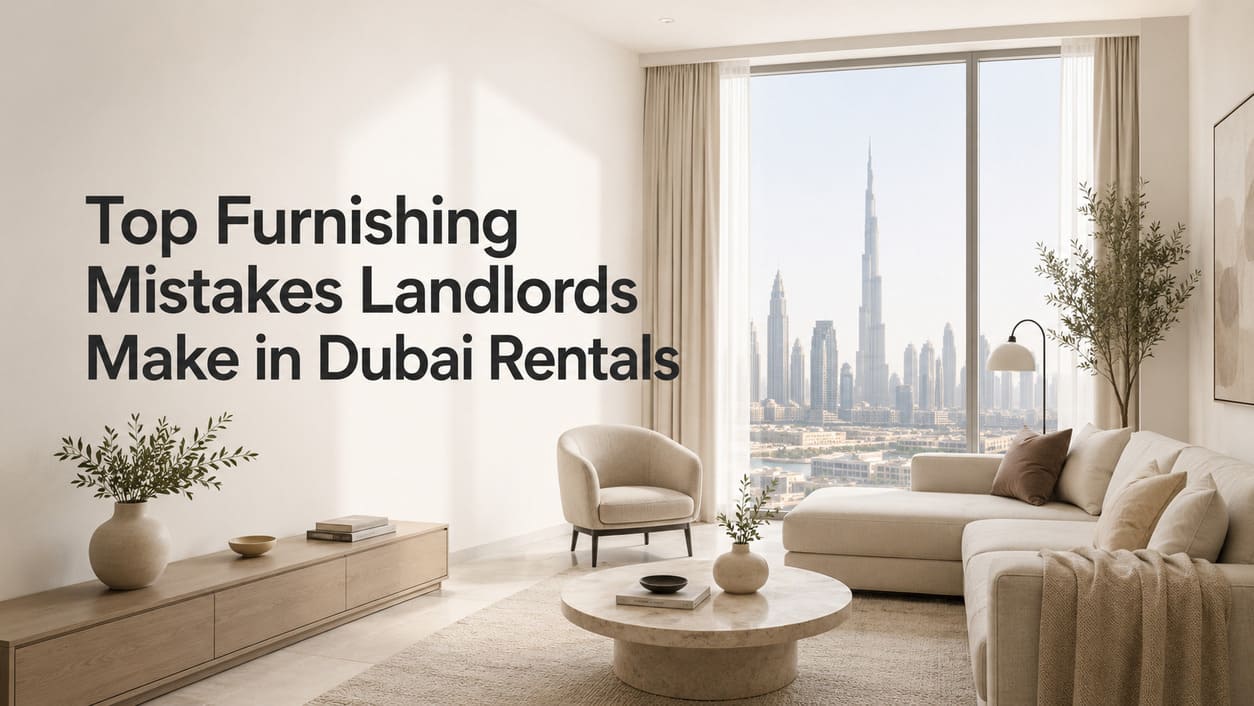
In Dubai’s rental market, furnishing is not just a styling choice. It can affect how quickly a property gets rented, how much interest it receives, and how tenants feel about living there after they move in. A well-furnished apartment can look more valuable, photograph better, and create a smoother rental experience. A poorly furnished one can do the opposite.
That is why the most common furnishing mistakes landlords make in Dubai rentals often have a direct impact on rental ROI. Tenants do not only notice whether a unit is furnished. They notice whether it feels comfortable, practical, modern, and worth the asking rent. In a competitive market, that difference matters.
This guide explains the top furnishing mistakes landlords make in Dubai rentals and how to avoid them. It is written for ordinary landlords who want their furnished property to attract the right tenants, reduce complaints, and perform better over time.
Why Furnishing Mistakes Cost Landlords More in Dubai
Dubai is a market where presentation matters. Many tenants compare several properties online before they ever book a viewing. That means furniture has to work in two ways at once. It must look good in listing photos, and it must also feel right in real life.
When furnishing is done badly, the problem is rarely limited to appearance. A unit may feel smaller than it is, look outdated next to nearby listings, or give the impression that the landlord has cut corners. Even when the location is strong, poor furnishing can lower perceived value and make a rental harder to justify at the target price.
The table below shows how common furnishing mistakes affect rental performance.
|
Furnishing mistake |
How it hurts the rental |
Better approach |
|
Choosing furniture based on personal taste |
The apartment may not appeal to the target tenant |
Furnish for the lifestyle of the likely renter |
|
Buying very cheap pieces |
Items wear out quickly and create repeat replacement costs |
Choose durable, easy-maintenance basics |
|
Overfilling rooms |
Spaces feel smaller and less functional |
Keep layouts open and practical |
|
Poor lighting |
Rooms look dull in person and flat in photos |
Use layered lighting and warm, balanced light |
|
Ignoring listing photos |
Fewer clicks and viewings from online searches |
Stage the home with photo-ready furniture and styling |
The Most Common Furnishing Mistakes Landlords Make in Dubai Rentals

The most expensive mistakes are usually not dramatic design failures. They are ordinary decisions that seem harmless at first, but slowly reduce demand, comfort, and long-term value.
Furnishing for Personal Taste Instead of the Target Tenant
This is one of the biggest mistakes landlords make. They choose furniture that reflects their own taste, habits, or lifestyle rather than the needs of the people most likely to rent the unit.
A landlord may love heavy traditional furniture, bold colors, or unusual statement pieces. But the average tenant is often looking for a home that feels neutral, clean, easy to live in, and easy to imagine as their own. In Dubai, many furnished rentals are aimed at professionals, couples, small families, or short-term residents who value convenience and visual simplicity.
The better approach is to start with the tenant profile. A one-bedroom in Dubai Marina may need a different furnishing strategy than a family apartment in Arabian Ranches. When landlords furnish for the real target market, the result usually feels more relevant and more rentable.
Choosing Cheap Furniture That Wears Out Too Fast
Trying to save money on furniture is understandable, but going too cheap can become expensive very quickly. Low-cost sofas lose shape, dining chairs loosen, bed frames creak, and thin fabrics begin to look tired after limited use. In a rental, wear and tear happens faster than many owners expect.
This matters even more in furnished apartments because tenants judge value through what they use every day. A flat that looks acceptable at first glance can create disappointment once the tenant notices poor comfort, weak materials, or damaged finishes.
A smarter strategy is to avoid the cheapest end of the market and focus on strong basics. The goal is not luxury. The goal is durability, comfort, and ease of maintenance. A rental-grade sofa in a neutral fabric will usually serve a landlord better than a stylish but fragile alternative.
Using Outdated or Generic Furniture That Makes the Property Forgettable
Some landlords furnish a unit with pieces that are technically fine but visually tired. Others rely on generic furniture packages that make the apartment look like dozens of other listings. In both cases, the result is the same. The property becomes forgettable.
In Dubai, where many renters start their search online, forgettable properties often struggle to stand out. Tenants may not consciously say, “The furniture package is too generic,” but they will scroll past a unit that feels bland, dated, or lifeless.
Avoiding this mistake does not require expensive interior design. Often it is enough to use modern, simple furniture with balanced proportions, a clean color palette, and a few carefully chosen details. The unit should feel current and polished, not over-designed.
Ignoring Layout, Scale, and Room Flow
A common furnishing mistake is focusing on individual items instead of how the whole room works. A large sofa may dominate a small living room. A dining table may block movement. An oversized bed may leave little space to walk around comfortably.
When furniture scale is wrong, even a good apartment can feel cramped. This is especially damaging in Dubai rentals where tenants expect homes to feel efficient and easy to live in. Poor layout also makes properties look less attractive in photos because rooms appear tighter and more awkward.
Landlords should think about movement, spacing, and visual balance. Each room should have a clear purpose and enough open space around the furniture. In many cases, removing one unnecessary item improves the apartment more than adding a decorative piece ever could.
Getting the Lighting Wrong
Lighting is often treated as a finishing touch, but in reality it shapes the entire feeling of a furnished rental. Harsh overhead light can make a room feel cold. Weak lighting can make it seem dull and less clean. Poorly lit apartments also photograph badly, which reduces listing performance before a tenant ever visits.
In Dubai, where bright exteriors and polished interiors are common expectations, lighting that feels gloomy or uneven creates an immediate disadvantage. It can also make furniture look cheaper than it is.
A better setup uses layered lighting. Ceiling lights provide basic visibility, while bedside lamps, floor lamps, or table lamps create warmth and depth. Warm, balanced lighting helps a rental look more inviting and more expensive without requiring a major budget increase.
Prioritising Style Over Comfort and Functionality
A furnished rental is not a showroom. It needs to function well in daily life. Yet many landlords choose items for appearance first and usability second. The result may be a beautiful dining chair that no one enjoys sitting on, a sofa that looks sleek but feels hard, or a bedroom that lacks blackout curtains and useful storage.
Tenants remember how a property feels. If the bed is uncomfortable or the living room is awkward to use, the furnishing has failed no matter how stylish it looks.
The best furnished rentals in Dubai strike a balance between clean design and practical comfort. A good mattress, supportive seating, usable side tables, proper curtains, and basic storage often matter more than decorative trends. When in doubt, landlords should choose comfort that still looks neat and modern.
Overdecorating the Space Instead of Keeping It Clean and Practical
Another frequent mistake is trying too hard to make the apartment look impressive. Too many cushions, accessories, wall pieces, rugs, and styling objects can create visual noise. Instead of feeling elevated, the unit begins to feel crowded and harder to maintain.
This is especially risky in a rental because more decorative items often mean more clutter, more cleaning, and more potential damage. Overdecorated rooms can also distract from the actual strengths of the property, such as layout, light, or views.
A better rule is to keep styling controlled. Furnished rentals benefit from a polished but restrained approach. A few well-chosen decorative elements are enough to make the space feel warm without reducing practicality.
Forgetting That the Apartment Has to Look Good in Listing Photos
Some landlords furnish a home for physical viewings only. They forget that the first viewing usually happens online. If the apartment looks dark, cluttered, unbalanced, or unfinished in photos, many potential tenants will never see it in person.
Photo-readiness is now part of furnishing strategy. Clean lines, open surfaces, balanced lighting, and properly sized furniture help listings perform better. Rooms should look complete but not crowded. The camera should be able to capture space, function, and mood clearly.
This does not mean the property needs elaborate staging. It means the furnishing should support good photography. In many cases, a few simple changes can improve results significantly.
How to Furnish a Dubai Rental the Right Way

Avoiding mistakes is important, but landlords also need a practical method. The best furnishing strategy is usually simple, repeatable, and based on how tenants actually use the home.
Start With the Tenant Profile, Not the Mood Board
Before buying anything, define who the property is for. Is the unit aimed at a single professional, a couple, a family, or short-term guests? The answer should shape the furniture selection, level of comfort, and overall setup.
A landlord who starts with a mood board may end up with a beautiful concept that does not match the rental audience. A landlord who starts with the likely tenant usually makes better spending decisions.
Invest in a Few High-Impact Pieces First
Not every furniture item affects tenant perception equally. Some pieces do far more work than others.
A bed and mattress strongly influence comfort. A sofa defines the living room. Curtains affect privacy and sleep quality. Lighting affects mood and photos. A dining or work area matters more than many landlords realize, especially in homes used by professionals.
When the budget is limited, it is better to spend more carefully on these high-impact items than to spread money across decorative extras.
Keep the Style Neutral, Modern, and Easy to Maintain
For most Dubai rentals, the safest design direction is neutral and current. That does not mean boring. It means using furniture that looks clean, works across different tenant profiles, and stays appealing for longer.
Neutral tones, simple shapes, durable surfaces, and easy-clean fabrics usually perform well. They also make future updates easier. If a unit needs a refresh later, a neutral base gives landlords more flexibility without requiring a full replacement of the scheme.
Create a Simple Pre-Listing Furnishing Checklist
Before publishing the listing, landlords should review the apartment as a tenant would. This step helps catch the small issues that reduce appeal or create avoidable complaints later.
-
Check that every room feels functional and not overcrowded.
-
Make sure lighting is warm, balanced, and sufficient.
-
Confirm that key furniture pieces are clean, stable, and in good condition.
-
Remove unnecessary decor that makes the space feel busy.
-
Review the apartment through the camera, not only in person.
-
Prepare a clear furniture inventory and condition record.
This kind of final review often improves both listing performance and tenant satisfaction.
Final Thoughts
The top furnishing mistakes landlords make in Dubai rentals are rarely about having no budget at all. More often, they come from furnishing without a clear strategy. When furniture is chosen for personal taste, short-term savings, or visual impact alone, the rental may look acceptable but still underperform.
The strongest furnished rentals are built around the tenant experience. They feel comfortable, practical, modern, and easy to live in. They also photograph well, wear better over time, and support stronger perceived value.
For landlords in Dubai, that is the real goal. Good furnishing is not about adding more. It is about making smarter choices that help the property rent faster, justify its price, and stay competitive in a crowded market.


Leave a comment
This site is protected by hCaptcha and the hCaptcha Privacy Policy and Terms of Service apply.