

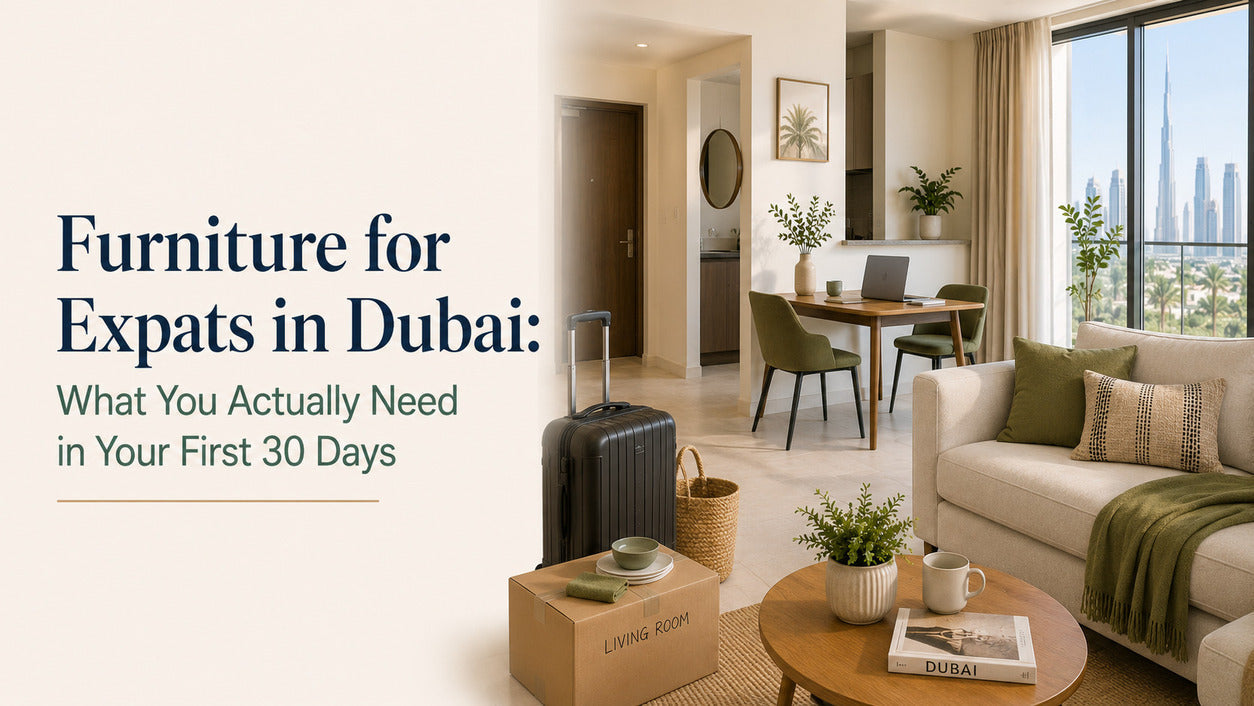
Moving to Dubai is exciting, but setting up a new home can feel overwhelming. You may have a signed lease, a few suitcases, and an empty apartment that needs to become comfortable quickly. The good news is that you do not need to buy everything at once. In your first 30 days, the goal is simple: sleep well, have privacy, sit comfortably, store your things, and create a basic daily routine.
This guide gives expats and new residents a practical 30-day plan: what to buy first, what can wait, and how to avoid costly furniture mistakes in Dubai.
The First 30-Day Rule: Focus on Function Before Decoration
The biggest mistake many expats make is trying to finish the whole home in the first week. This often leads to rushed decisions, oversized furniture, poor storage, and items that do not match real life in Dubai. A better approach is to build your home in layers.
In the first 30 days, focus on four priorities: sleeping, sitting, storing, and working or eating. Once these needs are covered, you can add rugs, artwork, accent chairs, balcony furniture, and decorative lighting.
|
Timeframe |
Main Goal |
What to Buy |
|
Days 1–3 |
Make the home livable |
Bed or mattress, curtains, basic seating, lighting |
|
Week 1 |
Set up daily routines |
Sofa, dining table or desk, wardrobe |
|
Week 2 |
Improve comfort |
Office chair, extra storage, rugs, better lighting |
|
Weeks 3–4 |
Add personality |
Decor, plants, artwork, balcony furniture |
This order helps you avoid unnecessary spending and gives you time to understand how you actually use the space.
Before Buying Furniture in Dubai, Check the Space

Dubai homes vary a lot. A studio in Business Bay, a one-bedroom apartment in JVC, a family apartment in Dubai Marina, and a villa in Arabian Ranches all need different furniture choices. Before placing an order, measure more than just the room. Measure doors, corridors, elevators, staircases, balcony entrances, and wall spaces.
This is especially important for sofas, beds, dining tables, wardrobes, and large TV units. A beautiful sectional sofa is useless if it cannot fit into the service elevator or blocks the living room. If you are renting, check what you are allowed to install. Some landlords and buildings may restrict drilling, wall mounting, curtain tracks, or built-in furniture.
Before delivery, ask your building management these questions:
-
Do I need to book a service elevator?
-
Are deliveries allowed on weekends?
-
Is there a move-in permit or delivery approval?
-
Where can the truck park?
-
Are installers allowed to drill or mount items?
-
Who removes packaging?
Days 1–3: The Move-In Survival Furniture Kit
Your first few days should be about basic comfort. The bedroom is the top priority because poor sleep affects everything else. Start with a quality mattress, a bed frame or temporary base, bedding, and blackout curtains. Dubai apartments can be bright, and privacy is important from day one.
Next, create a simple living area. A compact sofa, sofa bed, or lounge chair can be enough at the beginning. Add a small table and a floor lamp so the space feels usable in the evening.
Storage is also essential. Even if your apartment has built-in wardrobes, you may still need shoe storage, laundry storage, under-bed boxes, or a chest of drawers. If you work remotely, set up a basic work corner early. A dining table can work temporarily, but a proper chair is worth buying sooner rather than later.
Week 1: Set Up the Rooms You Use Every Day
By the end of the first week, your home should support your normal routine. In the living room, choose a sofa that fits the scale of the space. For many Dubai apartments, a compact three-seater or small L-shaped sofa works better than a huge sectional. Add a coffee table with storage if the room is small.
For the bedroom, a storage bed is often a smart choice. It gives you extra space for suitcases, seasonal clothes, bedding, or documents. Add bedside tables only if the room allows easy movement around the bed. In smaller bedrooms, narrow side tables may work better.
The dining area depends on your lifestyle. If you often eat out or live alone, a two-seater table or breakfast bar may be enough. If you host friends or live with family, an extendable dining table is more flexible.
|
Room |
First Items to Buy |
Items That Can Wait |
|
Bedroom |
Bed, mattress, curtains, wardrobe |
Bench, mirror, premium dresser |
|
Living room |
Sofa, coffee table, lamp |
Accent chair, large rug, artwork |
|
Dining area |
Table and chairs |
Sideboard, pendant light |
|
Home office |
Desk or table, ergonomic chair |
Shelving, decor |
Week 2: Choose Furniture for Your Type of Home
A studio apartment needs flexible furniture. A sofa bed, storage bed, folding dining table, slim desk, and open shelving can make one room work as a bedroom, living room, and office. Avoid bulky furniture that divides the room too much.
A one-bedroom apartment usually needs a comfortable bed, sofa, dining setup, wardrobe or chest of drawers, and a small work area. Multi-functional pieces are useful here: a coffee table with drawers, an extendable dining table, or a TV unit with closed storage can make the apartment feel cleaner.
A two-bedroom apartment often belongs to couples, families, or people who host guests. The second room may become a children’s room, guest room, or home office. Do not rush this decision. Live in the home for a week or two before buying everything for the second bedroom.
A villa or townhouse needs a different plan. Entryway furniture, larger dining tables, outdoor seating, kids’ study areas, and guest rooms become more important. However, villas can also feel empty if furniture is too small, so scale matters.
Buy, Rent, Second-Hand, Ready-Made or Custom?

There is no single best option for every expat. The right choice depends on your lease length, budget, family size, and how permanent your Dubai move feels.
|
Option |
Best For |
Main Advantage |
|
Ready-made furniture |
Most apartments and quick move-ins |
Fast delivery and predictable pricing |
|
Rental furniture |
Short stays and corporate assignments |
Low commitment |
|
Second-hand furniture |
Temporary setups and tight budgets |
Lower cost |
|
Custom furniture |
Long-term homes and awkward layouts |
Better fit and personalization |
If you are staying for less than a year, renting or buying second-hand may make sense. If you expect to stay for two or three years, ready-made furniture offers the best balance of cost and convenience. If you bought a property or have a long-term family home, custom wardrobes, wall units, or dining pieces can be worth the investment.
Dubai Climate: Choose Materials That Last
Dubai’s climate affects furniture more than many new residents expect. Strong sunlight, air conditioning, dust, and humidity can change how materials look and feel over time. For sofas, performance fabrics are often easier to maintain than delicate materials. For dining tables, durable surfaces such as treated wood, ceramic, stone, or high-quality veneer are practical choices.
Be careful with cheap untreated wood, low-quality laminate, and faux leather in rooms with strong sun exposure or weak air conditioning. Outdoor furniture should be UV-resistant and easy to clean. Blackout curtains help bedrooms stay darker and cooler, while sheer curtains soften daylight in living rooms.
Realistic First-30-Day Budget
Furniture costs in Dubai vary widely depending on brand, material, delivery speed, and whether you buy ready-made or custom. In the first month, most expats should aim for essential or comfortable, then upgrade later.
|
Home Type |
Essential Setup |
Comfortable Setup |
|
Studio |
AED 4,000–8,000 |
AED 8,000–15,000 |
|
1-bedroom apartment |
AED 8,000–15,000 |
AED 15,000–30,000 |
|
2-bedroom apartment |
AED 15,000–30,000 |
AED 30,000–55,000 |
|
Villa or townhouse |
AED 35,000–70,000 |
AED 70,000+ |
Do not cut costs on the mattress, sofa, ergonomic chair, curtains, and storage. These items affect daily comfort. Decor can wait.
Common Mistakes Expats Make When Furnishing in Dubai

Many furnishing problems come from rushing. Expats often buy a full furniture set before measuring properly, then discover that the bed is too large, the sofa blocks the balcony door, or the dining table makes the living room feel crowded.
Another common mistake is ignoring storage. Dubai rentals can look spacious during a viewing, but once suitcases, shoes, sports gear, documents, and laundry appear, storage becomes a daily issue. Choose beds, TV units, coffee tables, and benches that help organize the home.
A third mistake is choosing style before function. Think about where you work, where you eat, how often you host guests, and how much time you spend indoors during hot months. Also, arrange delivery timing, elevator access, assembly, and packaging removal in advance.
Week 3–4: Make the Home Feel Like Yours
Once the essential furniture is in place, you can add warmth and personality. Rugs help define zones in open-plan apartments. Lamps make evenings softer than ceiling lights. Plants, artwork, cushions, books, and personal objects make the home feel less temporary.
Many expat homes in Dubai mix modern furniture with cultural details, travel pieces, Arabic-inspired textures, Scandinavian simplicity, or warm natural tones. Keep larger furniture neutral and use smaller items to express personality. If you have a balcony, wait until you know how often you use it before buying outdoor furniture.
Where to Buy Furniture in Dubai
Expats in Dubai have several options. Online stores are useful for comparing prices, checking dimensions, and buying standard items quickly. Showrooms are better for testing sofas, mattresses, dining chairs, and fabrics. Custom furniture makers are helpful when the room has unusual measurements or when you need built-in storage.
Second-hand marketplaces can be useful for temporary items, but inspect carefully and consider delivery costs. Furniture packages are a good option for people who want a coordinated home without choosing every item separately. The best approach is often mixed: buy the mattress and sofa new, use ready-made storage, and choose custom furniture only where it truly solves a problem.
Final First-30-Day Checklist
Use this checklist as a simple guide before you start shopping. It keeps your first month focused and helps you avoid buying too much too soon.
-
Bed or mattress
-
Blackout curtains for the bedroom
-
Sofa or basic lounge seating
-
Dining table, desk, or multi-use surface
-
Wardrobe, drawers, or storage bed
-
Shoe and entryway storage
-
Basic lighting
-
Ergonomic chair if working from home
-
Coffee table or side table
-
Extra storage for laundry, suitcases, and documents
After these essentials are covered, move on to rugs, artwork, plants, balcony furniture, guest room furniture, and custom pieces.
FAQ
Is it better to ship furniture to Dubai or buy locally?
For most expats, buying locally is easier. Local furniture is designed for regional apartment sizes, delivery is faster, and you can avoid shipping delays, customs issues, and damage risks.
How much does it cost to furnish a 1-bedroom apartment in Dubai?
A basic 1-bedroom setup can start from around AED 8,000–15,000, while a more comfortable setup often falls between AED 15,000–30,000. The final cost depends on sofa quality, mattress choice, storage needs, and whether you choose ready-made or custom furniture.
What furniture should I buy first after moving to Dubai?
Start with a mattress or bed, curtains, basic seating, storage, lighting, and a table or desk. These items make the home functional before you spend money on decor.
Conclusion: Start Practical, Then Build Your Home
Furnishing a new home in Dubai does not have to happen in one rushed shopping trip. First, focus on sleep, seating, storage, privacy, lighting, and a basic work or dining area.
Once those essentials are in place, you can add personality, upgrade materials, and invest in custom pieces where they make sense. The best Dubai home is the one that fits your space, lease, climate, and daily life.

Leave a comment
This site is protected by hCaptcha and the hCaptcha Privacy Policy and Terms of Service apply.