

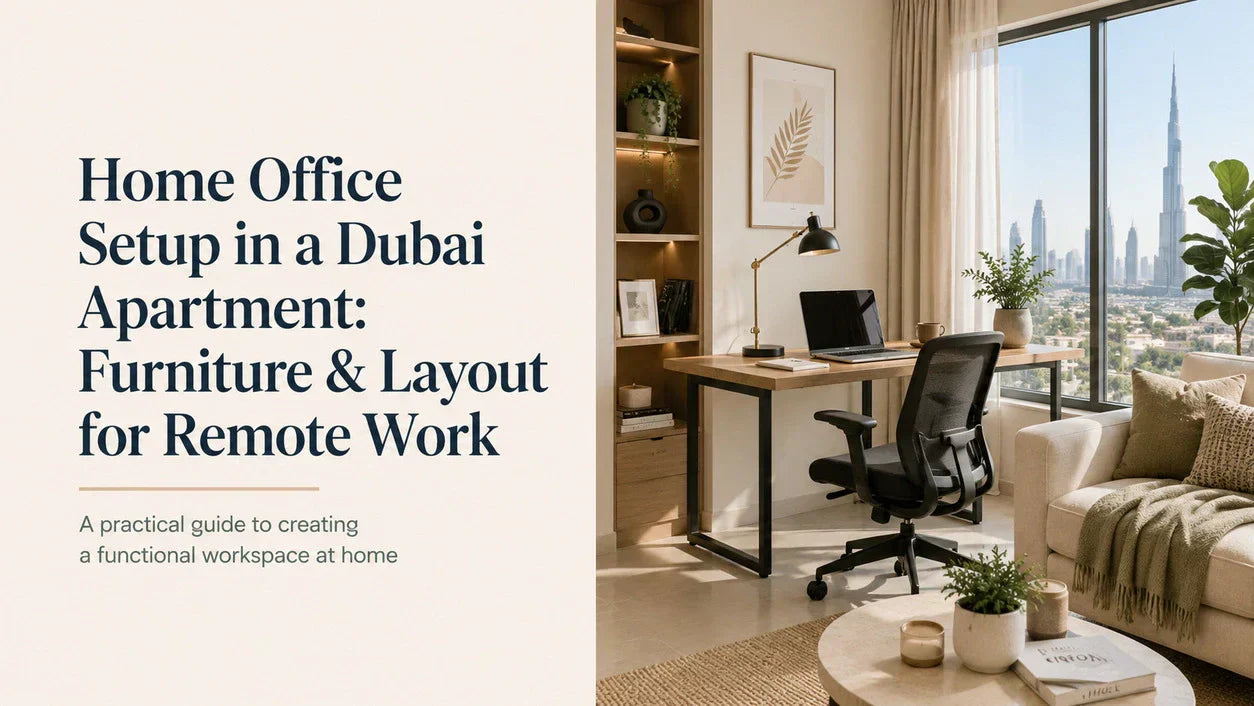
Remote and hybrid work is now a permanent part of life in the UAE, and most of it happens not in spacious villas but in compact apartments. This guide covers the furniture, layout, and practical decisions that turn even a studio corner into a workspace built for serious, comfortable remote work.
Why a Dubai Apartment Needs a Different Approach
A home office guide written for a house in Europe or the US will quietly fail you in Dubai, because a few local realities shape almost every choice you make.
Summers push past 45°C, so glare control matters as much as desk size. Apartments are compact, often 400–1,200 square feet, making every centimetre count. Shared walls let traffic and construction noise leak in, while desert dust and humidity reward materials that wipe clean. And because most residents rent, your setup usually has to be non-permanent: no drilling, no damage, easy to dismantle at the end of the tenancy. Keep these constraints in mind and the rest of the decisions become much simpler.
Plan Before You Buy: Work Style, Space, and Tenancy
The most expensive mistake people make is buying furniture before understanding how they actually work. Spend ten minutes answering a few honest questions first: Do you spend most of your day on video calls or in deep focus? Do you handle paper or work entirely on screen? How many monitors do you really need? And how much room can you realistically give up — a whole spare bedroom, a bedroom corner, or a slice of the living room?
Next, measure your space. Note the width of the corner or wall you will use, the location of the nearest power socket and router, and the swing space your chair needs. A workstation needs roughly 120–140 cm of width and about 70 cm of depth to feel comfortable, plus around 60–70 cm of clearance behind the chair.
If you rent, design around your deposit. Favour freestanding shelves over wall-drilled units, removable adhesive hooks and cable clips, tension rods for curtains, and pegboards that lean rather than mount. You can build a complete, professional setup without leaving a single hole in the wall.
Choosing the Right Spot in Your Apartment
Location is the single most impactful decision in your whole setup, and good furniture cannot rescue a badly chosen corner. In the UAE the sun travels east to south to west, so a north-facing window gives the most consistent, glare-free light through the day. South-facing rooms work too, as long as you add diffusing or blackout blinds.
Beyond light, position your desk away from the kitchen, where smells and the pull of the fridge break concentration. Try to avoid working from the bedroom; if space forces it, separate the zones with a bookshelf or curtain so your brain still associates the bed with rest. Finally, sit near a power outlet and, ideally, within reach of the router, since a wired connection is far steadier than Wi-Fi for international video calls.
Layout by Apartment Type

The right layout depends entirely on what you are working with. The table below maps the most common Dubai apartment situations to a furniture combination that actually fits.
|
Space |
Recommended desk |
Chair |
Storage |
Space-saving tactic |
|
Studio (under 500 sq ft) |
Wall-mounted fold-down desk (80–90 cm) |
Compact task chair or saddle stool |
Floating shelves + under-desk drawer |
Folds flat when not in use |
|
1-bed corner |
Corner or small L-shaped desk |
Mid-back ergonomic chair |
Vertical bookshelf beside desk |
Uses dead corner space |
|
Bedroom study |
Compact writing desk (100–120 cm) |
Slim task chair, no headrest |
Under-desk pedestal + shelves |
Build upward, not outward |
|
Living-room nook |
Slim desk that blends with decor |
Stylish neutral ergonomic chair |
Credenza with hidden storage |
Furniture that doubles as decor |
|
Covered balcony |
Weather-resistant compact desk |
Rattan or outdoor-safe chair |
Wall brackets |
Add shade and a fan for summer |
If you live in a shared apartment, choose a spot you can claim consistently, and lean on noise-cancelling headphones and a divider to carve out a private zone without renovating.
Furniture: A Practical Buyer's Guide
Three pieces carry your entire setup: the desk, the chair, and your storage. Get these right and everything else is optional polish.
Your desk is the platform for everything you do, so match its type to your space rather than your wish list. For most apartment dwellers, a wall-mounted folding desk or a compact L-shape gives the best balance of surface area and footprint.
|
Desk type |
Best for |
Space needed |
Price range (AED) |
|
Wall-mounted folding |
Studios and 1-bed units |
Minimal |
400 – 1,800 |
|
Standard writing desk |
General tasks |
Small |
400 – 1,200 |
|
Corner desk |
Small-room optimisation |
Corner only |
700 – 3,500 |
|
L-shaped desk |
Multi-monitor and creative work |
Medium |
900 – 4,000 |
|
Sit-stand desk |
Long hours, health-focused |
Small to medium |
1,800 – 9,000 |
Your chair deserves the biggest share of your budget, because your body pays the price of a bad one. Look for adjustable lumbar support, a seat-height range that lets your feet rest flat, adjustable armrests, and a breathable mesh back, which matters a great deal in the warm UAE indoor climate. Avoid working long hours from a dining chair or sofa; it quietly damages your back and posture.
For storage, think vertical. In a compact apartment, floor-to-ceiling shelves, a slim under-desk pedestal, and a few floating shelves keep your desk surface clear without eating floor space. A storage ottoman that doubles as a footrest, or a console that works as a standing desk, stretches every square foot further.
Ergonomics: Setting Up to Work Pain-Free
Ergonomics simply means shaping the workspace to fit your body instead of forcing your body to adapt. Done right, you can work eight hours without strain; done wrong, the damage accumulates invisibly over months. Use the measurements below as your reference.
|
Body area |
Correct setting |
Common mistake |
|
Monitor height |
Top of screen at or just below eye level |
Screen too low (typical with laptops) |
|
Monitor distance |
55–75 cm, about an arm's length |
Sitting too close |
|
Seat height |
Feet flat, thighs roughly level |
Chair too high, feet dangling |
|
Desk height |
Elbows at 90–100° when typing |
Desk too high for the chair |
|
Keyboard and mouse |
At elbow height, wrists neutral |
Mouse reaching too far out |
One free habit protects your eyes more than any gadget: the 20-20-20 rule. Every 20 minutes, look at something about 20 feet (6 metres) away for 20 seconds. Add small movements through the day — stand for phone calls, stretch between meetings — and your body will thank you.
Lighting for a Bright, Glare-Free Workspace
Lighting shapes focus, mood, and even sleep, and Dubai's abundant sun is both a gift and a problem. The goal is layered light you can control. Combine soft ambient ceiling light, a directed desk lamp for your work surface, and, if you stare at screens for hours, a strip of bias light behind the monitor to ease eye strain.
Manage the sun rather than fighting it. Position your desk perpendicular to the window, not facing it or with your back to it, and use sheer blinds to scatter harsh light. For video calls, put your main light source in front of your face, never behind you, so you appear clear and professional instead of as a silhouette.
Managing Noise in a Shared Building
Dubai is one of the world's busiest construction environments, and shared apartment walls let traffic, neighbours, and building noise leak straight into your calls. Uncontrolled background noise measurably reduces concentration and can undermine how you come across to clients.
You do not need a recording studio to fix this. Heavy curtains, a thick rug on tiled floors, and a bookshelf full of books all absorb sound naturally. For meaningful improvement, add a few acoustic foam panels on the wall opposite your desk. And for instant, reliable results regardless of your room, a good pair of noise-cancelling headphones does more than almost anything else.
Cables, Internet, and Tech Essentials
Tangled cables are more than an eyesore in Dubai; they trap dust and create a cluttered, distracting workspace. A simple under-desk cable tray hides power strips and adapters, Velcro ties keep runs neat, and switching to a wireless keyboard, mouse, and headset removes several cables at once.
Your internet is the lifeline of remote work. Both Etisalat (e&) and du offer home broadband suitable for video-heavy days; aim for at least 100 Mbps, and use a wired Ethernet connection to your desk where possible. If a cable run is impractical, a Wi-Fi 6 mesh node placed in your office room keeps calls stable. A small UPS is also worth considering, as it guards against brief power dips and keeps you online during short outages.
Decor, Colour, and Looking Good on Camera
A workspace that feels good keeps you in the chair longer. Colour has a real effect: blue tones support focus and analytical work, green reduces eye fatigue and feels calming, and white or off-white makes a small room feel larger. Use bold colours like red only as small accents.
Plants add life and clean the air, and a few thrive in air-conditioned Dubai apartments with very little care — snake plants, ZZ plants, pothos, and peace lilies are all forgiving choices. Finally, treat the wall behind your desk as your video-call backdrop. A tidy mix of books, a piece of art, and a single plant signals competence on every call without costing much at all.
Budget and Where to Buy in Dubai

You do not need to spend a fortune, but it helps to know the realistic ranges before you shop. The table below shows three setup tiers in AED.
|
Item |
Essential |
Mid-range |
Premium |
|
Desk |
400 – 1,200 |
1,500 – 3,000 |
4,000 – 9,000 |
|
Chair |
600 – 1,200 |
1,800 – 4,000 |
5,000 – 10,000 |
|
Storage |
300 – 600 |
700 – 1,500 |
2,000 – 5,000 |
|
Lighting |
150 – 300 |
400 – 800 |
1,200 – 3,000 |
|
Tech and accessories |
800 – 1,800 |
2,200 – 4,500 |
6,000 – 14,000 |
If money is tight, invest first in the chair, then the desk, then lighting and screens. Everything else can be added over time. For shopping, IKEA and Dragon Mart are strong for budget furniture, PAN Emirates and Home Centre cover the mid-range, Amazon.ae and Noon are convenient for tech and accessories, and Dubizzle is excellent for quality second-hand pieces from departing expats.
One hidden cost catches many people out: running a home office through Dubai's summer raises your DEWA bill, since your air conditioner now works through the day instead of sitting idle. Energy-efficient lighting, blackout blinds, and a well-placed fan all soften that blow.
Tailoring Your Setup to Your Job
Different roles need different priorities, so spend where your work demands it.
|
Role |
Priority desk |
Key extras |
|
Developer / IT |
L-shaped, dual monitors |
Cable management, USB-C dock |
|
Analyst / accountant |
Standard desk, dual screens |
Document holder, privacy filter |
|
Designer / editor |
Large L-shaped |
Colour-accurate monitor, good lighting |
|
HR / recruiter |
Compact desk |
HD webcam, ring light, headset |
|
Writer / creator |
Clean minimal desk |
Noise-cancelling headphones, task light |
Productivity and Protecting Work-Life Balance
The hardest part of working from a small apartment is that work and rest share the same walls. Create a boundary even without a separate room: define your office zone with a rug, and physically pack your laptop and notes away at the end of the day so the space mentally resets.
Knowing when to stop matters as much as starting on time. Log off at a reasonable hour rather than drifting back to messages late at night, and you will work better the next day. When you need a change of scene, Dubai's many work-friendly cafes and co-working spaces are a healthy reset and a good way to avoid burnout.
A Quick Note on Working From a Rented Apartment
Many residents wonder whether they can legally run a business or freelance from a rented Dubai apartment. As a general rule, quiet remote work for an employer is fine, while running a registered business or hosting clients may require a licence or a free-zone freelance permit. Rules change and depend on your situation, so check current guidance from official UAE sources before formalising anything. This is general information, not legal advice.
Your Weekend Setup Plan
You can build a complete home office in a single weekend if you work in order. Start by choosing and measuring your spot, then buy the chair and desk first since they have the longest impact. Set up your ergonomics using the measurements above, sort your lighting and internet, and finish with cable management, storage, and decor. Tackle it in that sequence and you avoid costly re-buys.
Frequently Asked Questions
How much does a home office cost in Dubai?
A reliable, functional setup starts around AED 3,300–6,500, covering a desk, an ergonomic chair, basic lighting, and core tech. A comfortable mid-range setup runs roughly AED 8,000–18,000, while premium builds with sit-stand desks and high-end chairs can reach AED 25,000 or more.
Can I set up a home office without drilling holes in a rented apartment?
Yes. Use freestanding shelves, removable adhesive hooks and clips, tension-rod curtains, and leaning pegboards. A full professional setup is entirely possible without damaging walls or risking your deposit.
How do I work in a small studio apartment?
Use a wall-mounted fold-down desk that disappears when not in use, build storage vertically with floating shelves, choose a compact chair without a headrest to save depth, and place your desk in a north or east-facing corner for soft, glare-free light.
What is the best chair for long hours in the UAE climate?
Look for an ergonomic chair with a breathable mesh back, adjustable lumbar support, a seat-height range that keeps your feet flat, and adjustable armrests. The mesh back is especially important in warm indoor conditions.
How do I reduce noise from neighbours and the street?
Combine heavy curtains, a thick rug, and acoustic foam panels on the wall opposite your desk, and use noise-cancelling headphones for instant relief during calls. Together these can cut perceived noise dramatically.
Will a home office increase my DEWA bill?
Yes, mainly because your air conditioner runs through the working day. Energy-efficient lighting, blackout blinds to reduce heat gain, and a fan to lower your reliance on the AC all help keep the increase modest.
Final Thoughts
A great home office in a Dubai apartment is not about spending the most money; it is about making the right decisions in the right order. Start with how you work and where the light falls, give your body a proper chair and desk, control the sun and the noise, and add the small touches that make the space yours. Build it thoughtfully and your apartment corner can outperform many traditional offices — no villa required.
اترك تعليقًا
This site is protected by hCaptcha and the hCaptcha Privacy Policy and Terms of Service apply.