

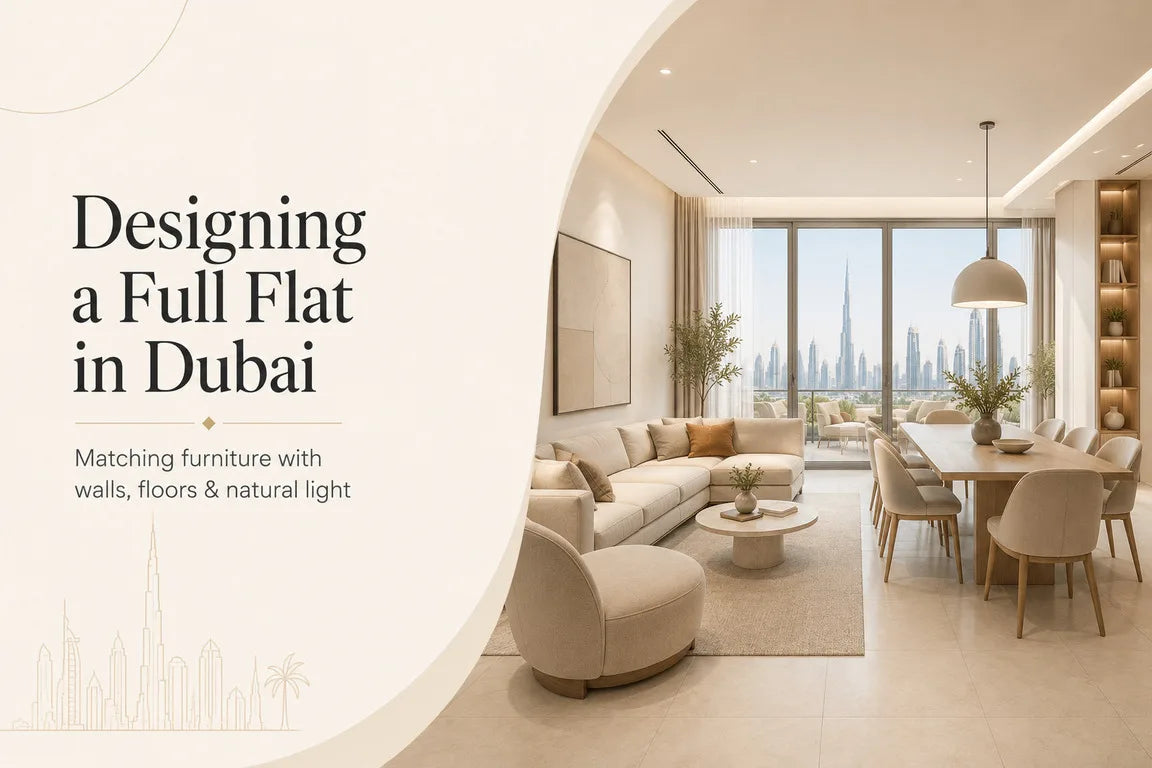
Designing a full flat is not only about choosing a beautiful sofa, a stylish dining table or a comfortable bed. A well-designed home feels connected. The furniture works with the walls, the floor supports the colour palette, and natural light makes the space feel open rather than harsh or empty.
This is especially important in Dubai, where many apartments have bright daylight, large windows, neutral walls, glossy tiles, marble-look flooring and open-plan layouts. The wrong furniture can make a flat feel cold, crowded or unfinished. The right combination can make even a compact apartment feel calm, modern and ready to live in.
Whether you are furnishing a studio, a one-bedroom apartment, a family flat or a rental property, the best results come from one clear design system: walls, floors, furniture and light should be planned together.
Why Full Flat Design Needs a System
Many people start by buying furniture piece by piece. They choose a sofa they like, then a coffee table, then a bed, then dining chairs. The problem is that each item may look good on its own but feel disconnected inside the apartment.
Full flat design works differently. It starts with the fixed elements of the home: the wall colour, flooring, window size, amount of natural light and room layout. After that, furniture is selected to support the space, not fight against it.
In Dubai apartments, this approach matters because interiors often include light tiles, beige walls, floor-to-ceiling windows and open living areas. If every item is also beige, the flat can look flat and unfinished. If every item is dark or bulky, the space can feel smaller than it really is. A good full flat design creates balance between colour, texture, scale and function.
Start with Walls, Floors and Windows

Before buying furniture, look carefully at what already exists in the apartment. Walls, floors and windows create the base of the interior. They decide which furniture colours will look warm, cold, heavy or light.
White walls give you flexibility, but they can feel empty without texture. Beige walls feel warm and natural, but they need contrast. Grey walls can look elegant, but they often need warmer furniture to avoid a cold atmosphere. Flooring is just as important. Glossy tiles, marble-look floors, wood, laminate and rugs all change how furniture appears in the room.
Natural light is another key factor. A sofa that looks soft and warm in a showroom may look much lighter in a sunny Dubai apartment. A dark TV unit may look stylish in the evening but too heavy during the day. This is why furniture should be chosen with the real apartment in mind.
|
Fixed element |
What to check |
Design impact |
|
Walls |
White, beige, grey, accent wall, textured panels |
Sets the colour direction |
|
Floors |
Tile, marble, wood, laminate, rug |
Affects warmth and contrast |
|
Windows |
Size, direction, direct sun, glare |
Changes how colours look |
|
Layout |
Open-plan, narrow hallway, compact bedroom |
Defines furniture size and placement |
The Main Rule: Balance Tone, Texture and Visual Weight
A good interior is not about matching everything exactly. It is about balance.
Tone means whether the space feels warm, cool or neutral. Warm interiors often use beige, cream, oak, walnut, brass and soft fabrics. Cool interiors use grey, white, black, glass and chrome. Neutral interiors mix both, but they need one dominant direction to feel intentional.
Texture adds depth. A white wall, cream sofa and beige floor can look too plain if all surfaces are smooth. Add texture through linen, boucle, wood grain, woven rugs, wall panels, curtains or matte ceramics. Texture is what makes a simple interior feel designed.
Visual weight means how heavy furniture looks. A large dark sofa has more visual weight than a slim cream sofa. A solid wood coffee table feels heavier than a glass or metal one. In small Dubai apartments, visual weight matters because bulky furniture can quickly make the flat feel smaller. In larger apartments, heavier pieces can create a more grounded and luxurious look.
Matching Furniture with Wall Colours
White walls are common in Dubai apartments because they make rooms feel bright and clean. The risk is that the space can look unfinished. To avoid this, add furniture with texture and contrast. A cream sofa can work well if paired with a wood coffee table, a rug, artwork and black or brass accents. For a more modern look, use a neutral sofa with a darker TV unit or side tables.
Beige and sand-coloured walls create a warm base. They work well with oak, walnut, ivory, muted green, terracotta and bronze details. The main mistake is making everything the same shade of beige. A beige wall, beige sofa, beige curtains and beige floor can look dull. Add contrast through a darker table, a textured rug, accent chairs or wall art.
Grey walls need warmth. They can look elegant in a Dubai apartment, but if you add grey furniture, grey floors and chrome details, the room may feel cold. Warm wood, cream upholstery, soft curtains and warm lighting make grey walls more comfortable.
Accent walls should be treated carefully. A marble-effect wall, wood panel wall or dark painted wall already has strong visual impact. Furniture in front of it should usually be cleaner and simpler. For example, a textured TV wall pairs well with a low, minimal TV unit. A bedroom feature wall works best with a calm bed frame and balanced bedside tables.
Matching Furniture with Floors
Floors are often ignored when people choose furniture, but they are one of the strongest design elements in a flat. In Dubai, many apartments have light tile or marble-look floors. These floors reflect light and make rooms feel larger, but they can also feel cold. Soft upholstery, warm wood and rugs help create comfort.
Beige floors are easy to work with, but they need contrast. Cream, ivory, oak, walnut, olive, black metal and brass can all work well. The goal is to keep the space warm without making it too flat.
Grey floors are more difficult. They can look modern, but they need warmth from furniture. A beige sofa, walnut dining table, textured rug or warm curtains can soften the look. Avoid filling the room only with grey, white and black unless you want a very cool minimalist style.
Wood or wood-look flooring already brings warmth. In this case, do not use too many different wood finishes. If the floor is light oak, choose furniture that is either close in tone or clearly darker. If every wooden item has a different shade, the interior can look accidental.
|
Floor type |
Furniture that works well |
What to avoid |
|
Light tile or marble |
Warm wood, rugs, soft fabrics, cream sofa |
Too much glossy furniture |
|
Beige flooring |
Walnut, oak, ivory, muted green, black accents |
All-beige furniture |
|
Grey flooring |
Cream, warm wood, brass, textured rugs |
Cold grey-on-grey schemes |
|
Wood flooring |
Balanced wood tones, fabric upholstery, simple shapes |
Too many wood finishes |
Rugs are one of the easiest ways to connect furniture with floors. A rug can visually link the sofa, coffee table and floor into one zone. In a living room, the rug should be large enough to sit under at least the front legs of the sofa and chairs. In a bedroom, it should extend beyond the sides of the bed to create softness when walking.
Designing Around Natural Light in Dubai

Natural light is one of the biggest advantages of Dubai homes, but it needs control. Strong sunlight can make colours appear brighter, create glare on screens and make glossy finishes feel too reflective. This is why curtains, furniture placement and material choice are important.
If your flat gets strong direct sunlight, use sheer curtains during the day and heavier curtains when privacy or heat control is needed. Matte finishes are usually more comfortable than glossy ones in very bright rooms. Fabrics should be durable and easy to maintain, especially for sofas placed near windows.
If the apartment feels dark, choose lighter wall colours, slim furniture and reflective details. Mirrors can help, but they should be placed to bounce light naturally rather than create uncomfortable glare. Glass tables, light rugs and soft curtains can also make a dark room feel more open.
|
Light situation |
Best design response |
|
Strong direct sun |
Sheer curtains, matte finishes, UV-resistant fabrics |
|
Limited daylight |
Light walls, mirrors, slim furniture, soft lighting |
|
Floor-to-ceiling windows |
Low-profile furniture, layered curtains, balanced rugs |
|
Glare on TV or desk |
Change placement, use curtains, avoid glossy surfaces |
Always check furniture colours in natural light before making final decisions. A sofa, rug or wood finish can look different in morning light, afternoon sun and evening artificial light.
Room-by-Room Full Flat Design Guide
The living room is usually the centre of a Dubai apartment. Start with the sofa, because it sets the tone for the whole space. Then connect it with the TV unit, coffee table, rug and wall colour. If the walls and floors are light, add contrast through wood, black details, textured fabric or a darker accent chair. If the space is small, choose slim legs, low profiles and a rug that defines the seating area without blocking movement.
The dining area should feel connected to the living room, especially in open-plan apartments. The dining table does not need to match the coffee table exactly, but the materials should speak the same language. For example, a walnut coffee table can work with a walnut or dark wood dining table. Dining chairs can match the sofa colour or introduce a soft accent.
In the bedroom, the bed is the main visual element. The headboard should work with the wall behind it. A plain wall can handle a textured headboard, while a feature wall may need a simpler bed frame. Bedside tables should match the bed frame, floor or wardrobe, not compete with all of them at once. Curtains are also important because they control morning light and make the room feel softer.
A home office needs both comfort and light control. Do not place the desk where direct sun hits the screen. A desk near a window is pleasant, but glare can make work uncomfortable. For video calls, a calm wall colour or simple shelving behind the desk creates a better background.
The entryway is small but important. A console table, mirror, shoe storage and wall art can make the flat feel complete from the moment someone enters. In narrow hallways, use slim furniture and mirrors to keep the area open.
Full Flat Furniture Packages vs Buying Piece by Piece
Buying individual furniture pieces gives flexibility, but it also increases the risk of mismatched colours, wrong sizes and disconnected materials. A full flat furniture package can solve this by creating one coordinated look across the apartment.
This is useful for expats, landlords, Airbnb owners, rental apartments and people moving into a new home quickly. A curated furniture package in Dubai can include the main items for the living room, bedroom, dining area and home office, while keeping the same design direction.
Individual customization is still useful when the apartment has unusual walls, strong flooring, custom joinery or existing furniture. The best approach is to combine a coordinated base with a few personal accents.
Common Matching Mistakes to Avoid
Even expensive furniture can look wrong if it is chosen without context. These are the most common mistakes when furnishing a full flat in Dubai:
-
Buying furniture before checking wall and floor tones.
-
Using too many different wood finishes in one apartment.
-
Choosing bulky furniture for compact rooms.
-
Blocking natural light with tall storage or heavy curtains.
-
Making everything beige without contrast or texture.
-
Ignoring rug size in the living room or bedroom.
-
Placing a desk or TV directly in strong glare.
Avoiding these mistakes will make the apartment feel more spacious, more comfortable and more professionally designed.
Checklist Before You Buy Furniture for a Full Flat
Before purchasing furniture, measure every room and take photos of the apartment in daylight. Check whether the walls and floors feel warm, cool or neutral. Decide on two or three main materials, such as oak, cream fabric and black metal, then use them consistently.
Think about storage early. A beautiful apartment will not stay beautiful if there is nowhere to keep daily items. Choose storage beds, TV units, wardrobes, sideboards and bedside tables based on real needs, not only appearance.
Finally, plan curtains and rugs after the main furniture is selected. These soft elements often bring the whole design together.
FAQ
How do I match furniture with wall colours in a Dubai apartment?
Start by checking whether your walls feel warm, cool or neutral. White walls need texture and contrast, beige walls need darker or richer accents, and grey walls often need warm wood or cream fabrics. The furniture does not have to match the wall exactly. It should support the tone of the room while adding enough contrast to make the space feel complete.
What furniture colours work best with beige floors?
Beige floors work well with cream, ivory, oak, walnut, muted green, black accents and brass details. The main goal is to avoid making the whole room one flat beige tone. A textured rug, darker coffee table, warm wood dining set or accent chair can help the interior feel more layered and modern.
How can I use natural light when designing a full flat in Dubai?
Use natural light as part of the design plan. In very sunny rooms, choose sheer curtains, matte surfaces and fabrics that can handle strong daylight. In darker rooms, use light walls, mirrors, glass tables and slim furniture. Always consider glare before placing a TV, desk or reading chair near a window.
Should furniture match the floor or contrast with it?
Furniture does not need to match the floor exactly. In most cases, controlled contrast works better. A sofa can be lighter or darker than the floor, while a rug connects the two. Wood furniture should either be close to the floor tone or clearly different. Slightly mismatched wood tones can look accidental if there is no clear design logic.
What is the easiest way to furnish a full apartment in Dubai?
The easiest way is to start with a coordinated furniture plan or a full flat furniture package. This helps keep the sofa, bed, dining table, storage and smaller items consistent in style and scale. It is especially useful for new apartments, rental homes, expats and landlords who want a ready-to-live interior without choosing every item separately.
Final Thoughts
Designing a full flat in Dubai is about more than filling rooms with furniture. The best interiors connect walls, floors, natural light and furniture into one clear system. When colours, textures, materials and room functions work together, the apartment feels calm, modern and comfortable.
A well-planned flat does not need to be overdecorated. It needs the right balance: warm enough to feel like home, practical enough for daily life, and coordinated enough to look complete from the first day.
Leave a comment
This site is protected by hCaptcha and the hCaptcha Privacy Policy and Terms of Service apply.